Moving Restrictions
What Items Will Movers Not Transport in Chantilly?
By Swift Movers, LLC · August 1, 2026 · 8 min read
Federal carrier rules block movers from loading hazardous materials, perishables, plants, and irreplaceables onto the truck. Here is the full Chantilly list, plus how to handle each category before move day so nothing derails your schedule.
Hazardous Materials Federal Carriers Cannot Move
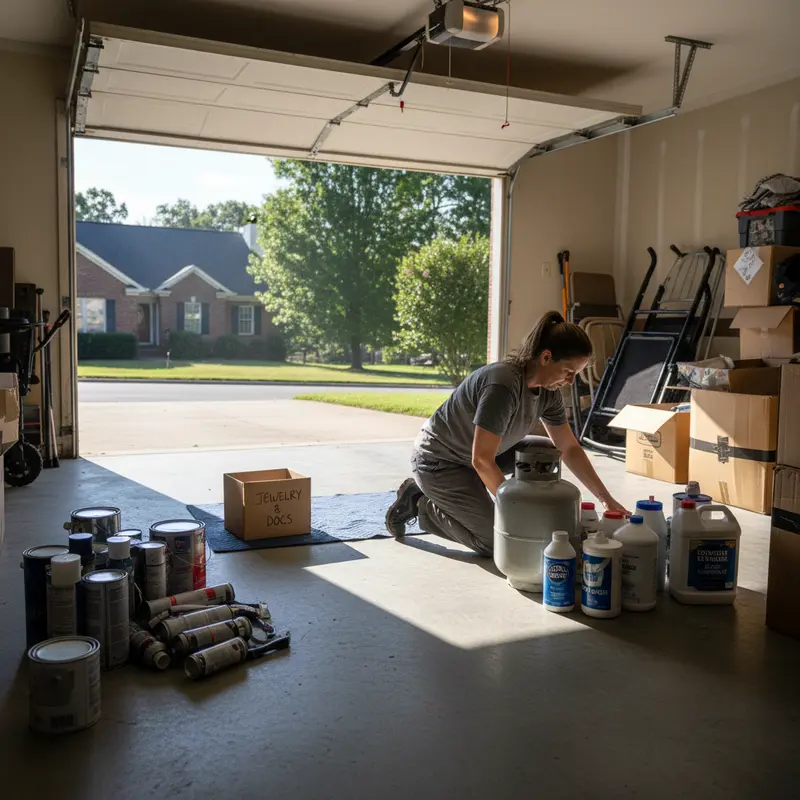
Every licensed mover in Virginia follows DOT and FMCSA Hazmat Class rules. These regulations block anything flammable, explosive, corrosive, or pressurized from riding in a moving truck. The list is longer than most homeowners expect, and the items are often sitting in the garage or under the kitchen sink right now.
The most common restricted items in a Chantilly household include propane tanks (full or empty), gasoline, kerosene, motor oil, lighter fluid, charcoal, and acetylene torches. Aerosol cans such as hairspray, spray paint, WD-40, and air freshener also fail the rule because the pressurized contents can rupture inside a hot trailer.
Ammunition, fireworks, sparklers, road flares, and matches are flat refusals from any reputable carrier. Pool chlorine, muriatic acid, fertilizer, weed killer, and pesticides round out the list, along with paint, paint thinner, varnish, and nail polish remover. Even car batteries and certain lithium battery packs over a set watt-hour rating are off limits.
If you book residential moving in Chantilly, the crew lead will inspect garage shelves and utility rooms before loading. Anything on the no-go list stays behind, no exceptions, because a single leaked container can damage every box around it.
Perishables and Open Food Items
Refrigerated food, frozen food, and opened pantry items are not allowed on the truck for any move longer than a few hours. Heat builds quickly inside a closed trailer during a Northern Virginia summer, and spoilage attracts pests that can ride along to the new home.
Open boxes of cereal, bags of flour or sugar, opened cooking oils, and produce all fall into this category. Even sealed canned goods are discouraged on long hauls because the weight adds up fast and cans can dent or burst under stacked load.
For a local moving in Chantilly job inside the Beltway, some crews will load sealed pantry boxes if the trip is under two hours and the truck is climate-aware. Ask your estimator during the walkthrough, and plan to eat down the fridge and freezer in the two weeks before move day.
Plants, Pets, and Live Items
Houseplants are not loaded on interstate moves because USDA inspection rules vary by state, and many carriers will not assume the risk of soil-borne pests crossing borders. For a move within Virginia, some companies will transport plants short distances, but the survival rate in a dark trailer is low.
Pets never ride on the moving truck. There is no ventilation, no climate control in the cargo area, and no way for a driver to check on an animal during transit. Cats, dogs, birds, reptiles, and fish need separate transport in your own vehicle or through a licensed pet relocation service.
Aquariums must be fully drained before the move, and fish should travel with you in a battery-aerated container. Live plants you want to keep should ride in the back seat with the windows cracked, watered the morning of the move, and unloaded first at the new home.
Valuables, Documents, and Irreplaceables
Anything that cannot be replaced should never go on the truck, even though most items in this category are technically legal to transport. Cash, jewelry, watches, passports, birth certificates, social security cards, and tax records belong in a bag you carry yourself.
Prescription medications, especially controlled substances, should stay with you for both safety and chain-of-custody reasons. The same goes for medical devices like CPAP machines, hearing aids, and glucose monitors that you need access to within hours of arrival.
External hard drives, laptops, USB backups, and irreplaceable photo albums also belong in your car. Family heirlooms, wedding rings, military medals, and signed memorabilia round out the carry-with-you list. If you book professional packing services, ask the crew to flag and set aside these items in a clearly labeled box that never leaves your sight.
How to Prepare Restricted Items Before Move Day
Fairfax County operates two hazardous waste drop-off facilities that accept household chemicals from residents. The I-66 Transfer Station on West Ox Road and the Newington site on Furnace Road both take paint, solvents, batteries, pool chemicals, and aerosol cans during posted hours. Confirm hours on the county website before driving over, and bring proof of Fairfax County residency.
Propane tanks can be exchanged at most hardware stores or returned to the original supplier. Gasoline should be run down in lawn equipment or transferred to a neighbor before move day. Ammunition can be sold, gifted to a licensed family member, or transported in your own vehicle with the appropriate Virginia regulations followed.
For perishables, plan a two-week wind-down on the fridge and pantry. Donate sealed shelf-stable food to Western Fairfax Christian Ministries or another Chantilly area food pantry. Compost or discard anything open, and defrost the freezer 24 hours before the truck arrives.
Build a separate open-first box for valuables, documents, medications, chargers, and a change of clothes. Load it last in your own vehicle so it comes off first at the new home. Our essential moving tips guide covers the full week-by-week prep timeline if you want a printable checklist.
Schedule a Pre-Move Walkthrough to Sort Restricted Items
The cleanest move days start with a pre-move walkthrough where we identify hazmat items, irreplaceables, and anything that needs a Fairfax County drop-off trip before the truck pulls up. We will mark what stays, what rides with you, and what we load.
Call (703) 489-5194 to schedule a free walkthrough, or request a free moving quote online with a list of any unusual items you are unsure about. We will give you a written inventory review and a clear plan for every category before you start packing.
Frequently Asked Questions
Can movers transport a propane tank if it is empty?
No. Even an empty propane tank retains residual gas and pressure, which puts it on the federal hazmat refusal list. Exchange it at a hardware store, return it to your supplier, or drop it at the Fairfax County I-66 facility before move day.
Will movers take my houseplants across Virginia?
Some local crews will load plants for short in-state trips, but survival is not guaranteed in a dark trailer. For interstate moves, USDA inspection rules block most plant transport. Plan to carry plants in your own vehicle with windows cracked and water on hand.
What should I do with leftover paint and pool chemicals?
Drop them at the Fairfax County hazardous waste facility on West Ox Road or Furnace Road. Bring proof of residency, check posted hours, and plan the trip at least a week before move day so it does not collide with packing.
Can I keep jewelry and cash in a labeled box on the truck?
We strongly recommend against it. Cash, jewelry, passports, prescriptions, and hard drives belong in a bag or box you carry in your own vehicle. Even with a careful crew, items that cannot be replaced should never leave your direct control.
How far in advance should I sort restricted items?
Start two to three weeks out. That gives you time for a Fairfax County drop-off trip, propane exchange, freezer defrost, and a pantry wind-down without rushing. A pre-move walkthrough with your crew lead a week before the truck arrives catches anything missed.
Planning a Northern Virginia Move?
Swift Movers handles the packing, loading, and delivery, you focus on your new chapter.